
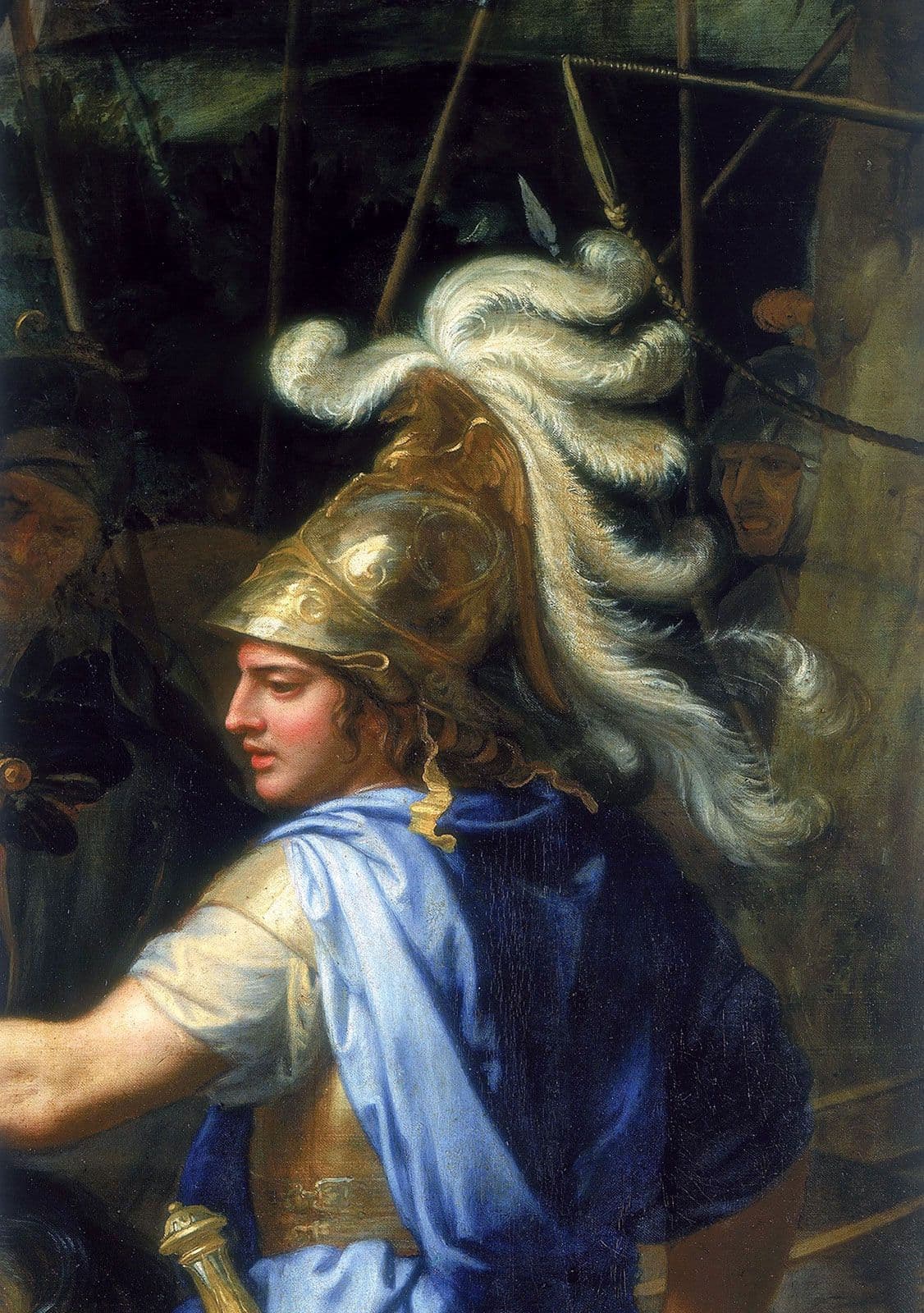
Alexander the Great died before his thirty-third birthday. By then he had become king of Macedonia, broken the Achaemenid Persian Empire, marched an army as far as the Punjab, founded cities, adopted parts of Persian court life, encouraged stories of his divinity, and left a territory too dependent on his own person to remain whole after him.
That list can sound like the trailer for a heroic film. It is also a record of destroyed cities, executions, enslavement, exhausted soldiers, political terror, and a scale of ambition that consumed people who had no vote in it. To read Alexander well, we have to hold ability and brutality in the same frame. Admiration that edits out suffering is not understanding.
I am interested in his story for another reason too. Alexander was born into advantages most people will never receive: royalty, elite teaching, military training, political access, and an army his father had already transformed. For those of us not born into wealth or powerful networks, his life raises a useful question. If we cannot inherit his resources—and should not imitate his conquests—what can we inherit from studying the pattern of his rise, decisions, excesses, and collapse?
The prince before the legend
Alexander was born in 356 BCE at Pella, the Macedonian capital, to King Philip II and Olympias of Epirus. Between roughly thirteen and sixteen, Aristotle taught him philosophy, medicine, and scientific investigation. Homeric heroes, especially Achilles, occupied his imagination. Yet his real education was not confined to books. He grew up close to a court where marriages were alliances, military reform was state policy, and succession could become a matter of survival.
Philip had turned Macedonia into the strongest military power in Greece. His army combined cavalry, specialist light troops, and a disciplined phalanx carrying long pikes. He also planned the invasion of Persia that Alexander would later lead. Alexander inherited not an empty throne and a dream, but a formidable operating system: trained soldiers, experienced commanders, political agreements, a strategic direction, and the authority to use them.
He still demonstrated unusual ability early. Left in charge while Philip campaigned in 340 BCE, he defeated the Maedi. At eighteen he commanded the left wing at Chaeronea, where Philip defeated the allied Greek states. But the relationship between father and son was unstable. After Philip married again, Alexander and Olympias briefly fled, and his position as heir looked less secure before reconciliation.
This is the first correction history offers to the self-made myth. Talent matters, and Alexander possessed it. So does the platform from which talent begins. He did not create every condition of his achievement. Nobody does.
Books cannot replace inherited wealth. But they can offer part of what privilege often carries quietly: a longer memory of institutions, mistakes, power, and consequence.
A twenty-year-old king secures the throne with speed and fear
Philip was assassinated in 336 BCE. Alexander, only twenty, was acclaimed by the army and moved quickly against rivals and alleged conspirators. He recovered wavering alliances in Greece and was appointed commander for the planned Asian expedition. When resistance appeared in the north, he crossed difficult terrain, defeated opponents, and returned before Greek cities expected him.
Thebes then revolted on a false report that he had died. Alexander destroyed the city in 335 BCE, leaving temples and the poet Pindar's house standing. Britannica records that 6,000 people were killed and the survivors sold into slavery. The punishment terrified other Greek states into submission; Athens received more lenient treatment.
Speed was one of Alexander's strategic weapons, but terror was another. He understood that one spectacular punishment could alter calculations far beyond the place where it occurred. The method worked politically. That does not make it morally neutral. Effectiveness and goodness are different measurements, and history becomes dangerous when we confuse them.
Crossing into Asia with an inherited machine
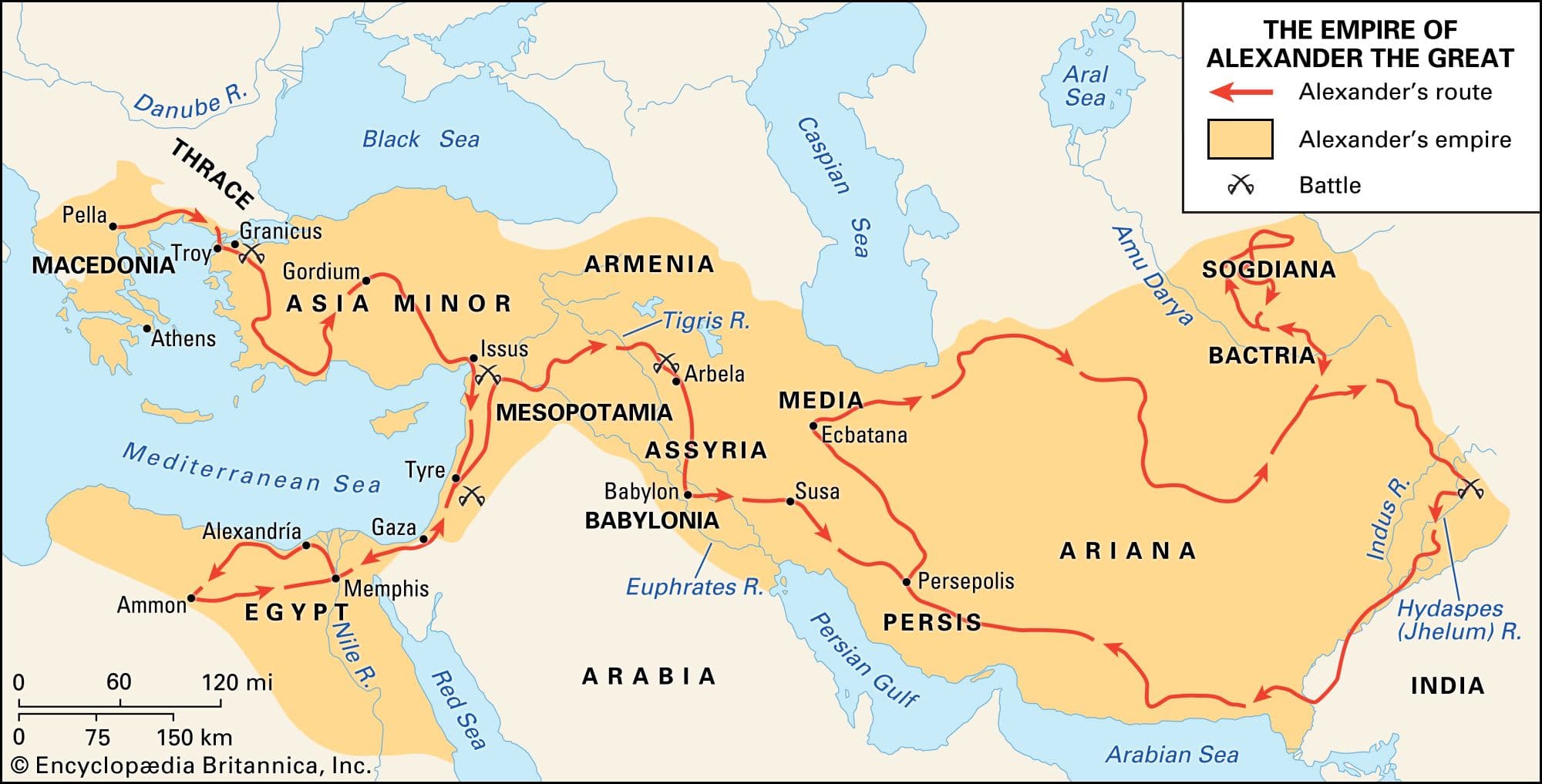
In spring 334 BCE, Alexander crossed the Dardanelles with about 30,000 infantry and more than 5,000 cavalry, leaving Antipater and over 13,000 soldiers to hold Europe. Nearly 14,000 of the invading force were Macedonian and around 7,000 came from the Greek League. The army travelled with engineers, surveyors, architects, scientists, historians, court officials, and siege specialists. This was conquest supported by administration and knowledge collection.
At the Granicus River, Alexander's first major encounter with Persian forces nearly drew him into disaster, but the Persian line broke. Western Asia Minor opened to Macedonian advance. He installed democracies in some Greek cities while keeping them under his effective control—liberation language paired with imperial authority.
In 333 BCE, faulty intelligence brought Alexander and Darius III into an unexpected confrontation near Issus. Alexander won decisively; Darius escaped and left his family behind. Alexander treated them with care, an episode often used to demonstrate restraint. Restraint, however, sat beside ruthless policy elsewhere.
The army was a system, not a crowd following one genius
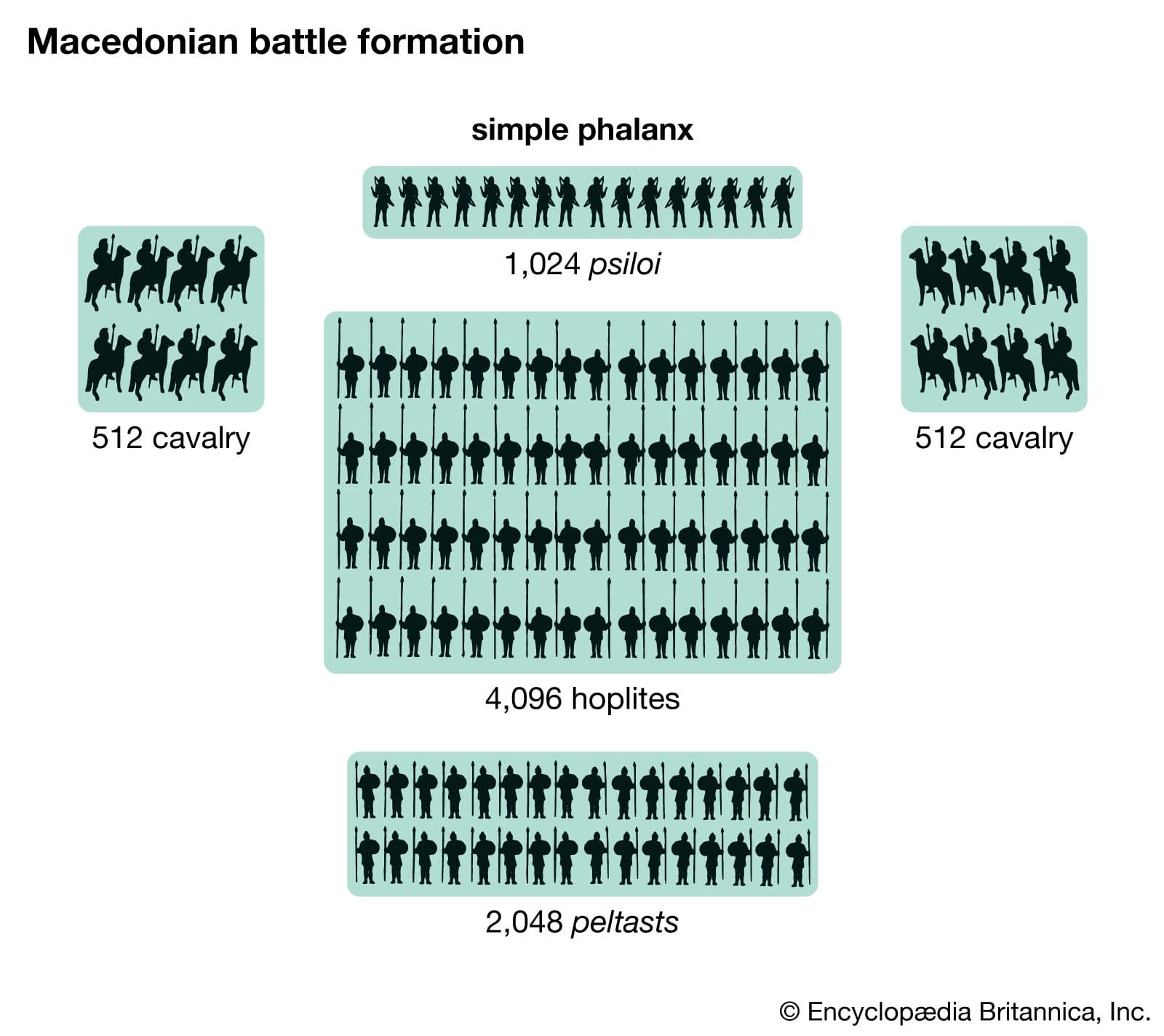
Popular retellings often place Alexander alone at the centre of the battlefield, as if intensity of personality moved thousands of people in formation. The Macedonian advantage was more organised. Philip had developed the sarissa phalanx, trained combined arms to work together, cultivated exceptional Companion cavalry, and built a command structure Alexander inherited with officers who had already served the kingdom for years.
The phalanx was an anchor rather than a complete answer. Roughly 9,000 heavy infantry carried pikes about four metres long, presenting an approaching enemy with several rows of points. Royal hypaspists could move more flexibly beside them. Archers, javelin troops, Thracian light infantry, Greek and Thessalian cavalry, engineers, scouts, and reserves solved problems the dense phalanx could not solve alone.
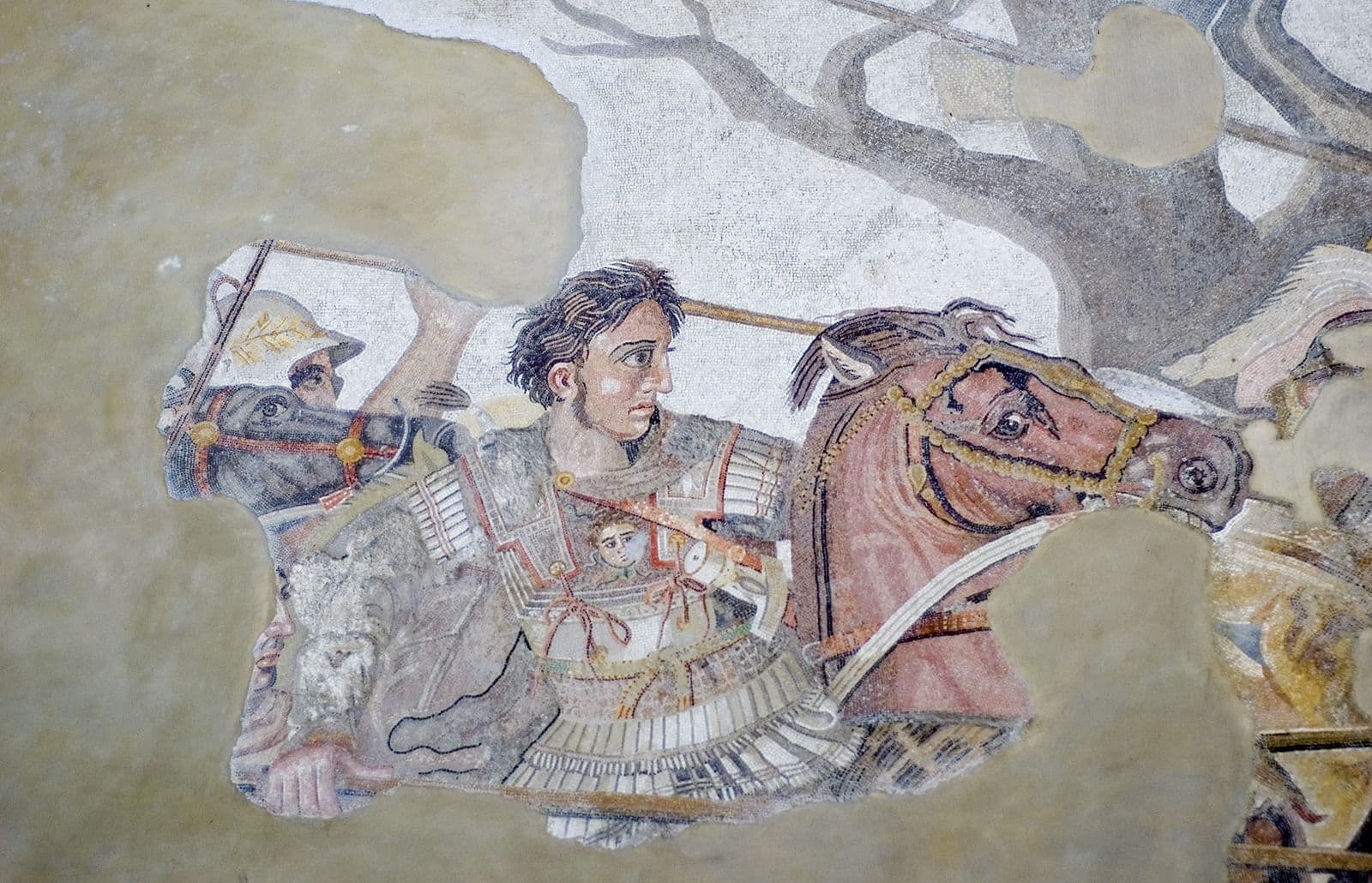
Alexander's particular gift was coordination under pressure. He used cavalry as the decisive striking force, often leading the Companion charge himself, while the infantry fixed an opponent in place. Light troops disrupted chariots, protected difficult ground, and opened space. Reserves guarded against encirclement. The brilliance was not one weapon; it was the timing with which different specialists became one action.
That distinction matters when we study achievement. A visible leader may make the final decision, but the decision only becomes real through systems built before the dramatic moment: recruitment, training, logistics, trust, equipment, delegation, communication, and people capable of correcting local problems without waiting for inspiration from the top.
Alexander deserves credit for using the machine with extraordinary imagination. Philip deserves credit for building much of it. The soldiers and officers deserve recognition for making both men's designs possible. History becomes more truthful when the famous name remains in the sentence without being allowed to occupy every role in it.
Tyre, Egypt, and the road to becoming more than a king
Alexander moved down the Mediterranean coast to remove the Persian fleet's access to ports. Tyre, an island city, resisted for seven months. His engineers built a causeway and used siege machinery until the city fell in 332 BCE. The victory was extraordinary military engineering accompanied by mass killing and the enslavement of women and children. Gaza resisted for another two months, and Alexander suffered a serious shoulder wound there.
Egypt welcomed him as a liberator from Persian rule. He respected local religious institutions, used Egyptian governors under separate Macedonian military control, and was crowned as pharaoh. Near the Nile's western mouth, he founded Alexandria on a site connecting sea, lake, and river routes. The city would outlive his empire as a centre of trade and learning.
He also travelled to the oracle of Amon at Siwa. The priest's traditional greeting to a pharaoh was later woven into claims that Alexander was the son of Zeus. Ancient history repeatedly warns us that power attracts flattering stories, and flattering stories can eventually enter the powerful person's understanding of himself.
The peace Alexander refused reveals the size of his ambition
During the siege of Tyre, Darius offered terms that would have satisfied a less absolute conqueror: 10,000 talents as ransom for his captured family and Persian territory west of the Euphrates. Tradition gives Parmenio the sensible line that he would accept if he were Alexander, and Alexander the answer that he would too—if he were Parmenio. Whether the exchange reached us exactly is less important than why later writers found it believable.
By then Alexander no longer wanted a profitable settlement on the edge of Asia. He wanted Darius to recognise him as lord of it. A negotiated border would leave two kings and two centres of legitimacy. Alexander's demand for unconditional submission turned the war from revenge and security into a contest over who had the right to embody the entire empire.
There is a pattern here that appears far beyond ancient monarchy. Success changes the reference point. The objective that once seemed daring becomes insufficient once it is within reach. New capacity produces new appetite, and appetite begins presenting itself as necessity. Leaders stop asking whether the original problem has been solved and start asking what else their momentum now permits.
Sometimes this expansion creates discoveries no cautious plan could produce. Sometimes it prevents an honourable ending because stopping feels like becoming smaller. Alexander's life contains both possibilities. The refusal of Darius's offer opened the road to Babylon, Susa, and Persepolis; it also committed the army to years beyond the victory many Greeks had originally been promised.
Gaugamela: the moment preparation became apparent instinct
The decisive battle took place on October 1, 331 BCE, on a plain near Gaugamela. Darius chose and levelled ground suited to a larger cavalry force and placed scythed chariots before his line. Ancient estimates of Persian strength vary wildly, but the Persians clearly outnumbered the Macedonians. Alexander faced the problem of delivering a concentrated blow without allowing the longer Persian line to wrap around him.
He built a second infantry line capable of turning around if Persian forces reached the rear and angled reserves behind both wings. Alexander then advanced to his right, drawing Persian cavalry away from the centre and toward ground Darius had not prepared. The movement forced the Persian left to extend and commit units to stop him.
When Darius released the chariots, Macedonian archers and javelin troops attacked the drivers; infantry opened lanes for surviving vehicles to pass through. As more Persian cavalry moved outward, a gap appeared near the centre. Alexander wheeled left and drove the Companion cavalry, hypaspists, and part of the phalanx into it. The Persian centre broke and Darius fled.
The victory was not clean or effortless. Parmenio's left wing came under severe pressure, Persian and Indian cavalry entered the Macedonian camp, and Alexander stopped his pursuit to answer a call for help. The battle demonstrates something more useful than invincibility: plans can create an advantage while other parts of the system are failing at the same time.
What later looks like instinct often rests on prepared options. The second line, angled reserves, light troops assigned to chariots, and flexible cavalry gave Alexander choices after contact with the enemy. Preparation did not predict every event. It increased the number of surprises the army could survive.
Gaugamela ends one empire and begins a harder problem
After defeating Darius at Gaugamela, Alexander occupied Babylon and Susa, where enormous royal treasures became available, then entered Persepolis. The palace of Xerxes was burned, probably as a symbolic end to the Greek war of revenge, though later tradition recast the event as a drunken impulse.
Darius was later deposed and killed by his own men. Alexander arranged a royal burial and increasingly presented himself as successor to the Persian Great King rather than merely its foreign destroyer. He retained some Persian administrators, adopted elements of Persian dress and court practice, and imagined a ruling partnership between Macedonian and Persian elites.
This adaptability distinguishes him from a commander who only wins battles. Alexander learned from the systems he conquered. He understood that territory could not be held forever by Macedonian spears alone. Yet his attempt at cultural fusion remained unequal and deeply contested. Macedonians feared losing privilege; conquered people still lived under an empire created by force.
Winning territory created a problem battles could not solve
An army can enter a capital in a season; governing different languages, tax systems, priesthoods, elites, trade routes, and local rivalries can consume generations. Alexander frequently adapted institutions he found instead of replacing everything with a Macedonian copy. In Babylon he retained Mazaeus, a Persian commander who surrendered the city, as satrap alongside Macedonian military oversight and even allowed him to issue coinage.
In Egypt, local governors worked under a separately controlled army. Native religious institutions received respect. Across former Persian territory, some satraps remained in office while Macedonian commanders secured force. This was partly practical tolerance and partly an imperial division of risk: local expertise kept administration moving, while armed power remained close to the conqueror.
Susa released treasure Britannica estimates at 50,000 gold talents. Persian bullion and a broader silver coinage stimulated trade across the Mediterranean and Asia, but treasure also financed continued campaigning. Wealth taken from one conquered centre became the fuel for reaching the next. Expansion could temporarily pay for expansion, a cycle that looks strong until the frontier stops moving or control costs rise.
Alexander founded or refounded cities along strategic routes, though ancient claims about more than seventy are difficult to treat as a precise count. These settlements supported soldiers, administration, commerce, and Greek cultural influence. Some colonists were not volunteers and later deserted. A city on a map could be a bridge between cultures, a garrison imposed on a region, an economic opportunity, and a home someone never chose—all at once.
The state taking shape was innovative and improvised rather than finished. Its central link was Alexander himself. Administrators obeyed him, armies followed him, local elites negotiated with him, and rival claims remained suspended by his victories. The empire acquired enormous reach without acquiring an equally durable method for transferring authority.
The farther he travelled, the more the costs gathered
Campaigning through Central Asia brought long resistance and harsher rule. Alexander ordered the killing of Parmenio after Parmenio's son Philotas was implicated in an alleged plot. He captured, mutilated, and executed Bessus. During a drunken quarrel, he killed Cleitus, a trusted commander who had once helped save his life. He later showed intense remorse, but remorse could not reverse the act.
Alexander married Roxana, daughter of a regional noble, and continued incorporating local elites. He also attempted to introduce proskynesis, a Persian court gesture of deference. To Macedonians and Greeks, performing it before a human looked like worship. The resistance forced him to abandon the experiment. Even an undefeated commander could not order every cultural meaning to change.
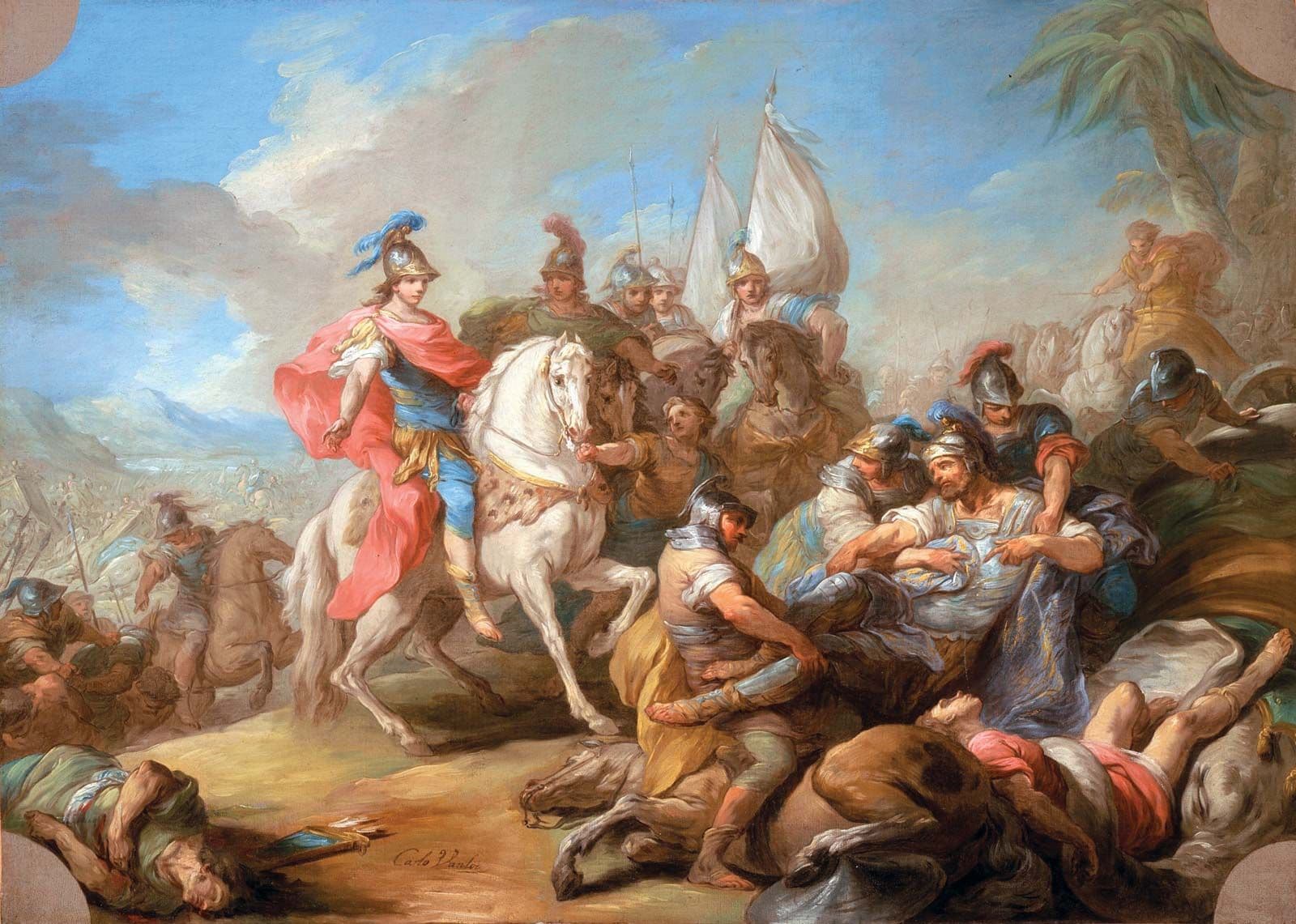
In 327 BCE he crossed toward India. At the Hydaspes River in 326, he defeated King Porus in his last great battle, then restored Porus as a ruler under his authority. The encounter is often remembered as mutual respect between warriors. It was still a battle fought because Alexander entered another ruler's territory and demanded submission.
At the Hyphasis River, his soldiers finally refused to continue east. They had followed him across years, climates, wounds, and distances, but their obedience had a limit. Alexander withdrew. History's supposedly unstoppable man was stopped not by an enemy king but by exhausted people who would no longer carry his ambition.
Hydaspes was a victory built from deception, weather, and patience
Porus held the eastern bank of the Hydaspes, the modern Jhelum, during the monsoon. The swollen river protected him, and his elephants made a direct crossing dangerous. Alexander repeatedly moved troops along his bank, allowing watchers to become familiar with activity that led nowhere. He publicly suggested he would wait for lower water while scouts searched upstream.
About eighteen miles away, part of the army crossed during a storm that muffled its movement. The first landing turned out to be an island rather than the far bank, forcing the soldiers to wade another channel. Porus sent a smaller force led by his son, which Alexander defeated before the main armies met. Troops left at the original camp crossed later, creating pressure from another direction.
Mud reduced the usefulness of Porus's chariots. Macedonian attacks concentrated on the flanks, while long sarissas helped infantry resist elephants at close range. Ancient casualty numbers remain estimates filtered through Greek traditions, but the fighting was severe. Porus was captured and, according to the familiar account, asked to be treated as a king. Alexander restored him as a subordinate ruler and expanded his territory.
The episode is often used as a story of magnanimity, and there was political intelligence in keeping a respected local king. It was also efficient imperial government. Alexander needed someone capable of ruling a difficult region. Respect and strategy do not cancel each other; powerful decisions often carry several motives at once.
Soon afterward, the army refused to cross the Hyphasis toward larger kingdoms further east. Hydaspes was therefore both triumph and warning. Alexander could solve an extraordinary battlefield problem, but each solution carried the army closer to a limit tactics could not remove.
The return was not a victory parade
Alexander's forces travelled down the Indus amid further fighting and severe violence. During an assault on a Mallian town, an arrow left him critically wounded. Part of the return crossed the Gedrosian desert, where water and food shortages caused terrible losses. People also died in a sudden flood. The decision remains one of the bleakest episodes of the campaign.
Back at Susa in 324 BCE, Alexander staged mass marriages between Macedonian officers and Persian women; he married a daughter of Darius, while thousands of soldiers received dowries for local marriages. He trained Persian youths for the army and elevated Persian nobles, deepening Macedonian resentment. A mutiny at Opis ended in emotional reconciliation and a vast banquet, but it exposed how fragile his vision of shared rule had become.
His closest friend Hephaestion died later that year. Alexander's grief was extravagant and destabilising. In Babylon the following spring, while planning further campaigns and infrastructure, Alexander fell ill after a banquet. He died on June 13, 323 BCE, after twelve years and eight months as king.
He had named no secure adult successor. His half-brother Philip Arrhidaeus and posthumous son Alexander IV were made kings and later murdered. Generals divided the provinces, fought, and founded their own kingdoms. The empire had expanded with astonishing speed because one person drove it; it fractured for much the same reason.
His legacy is larger than the empire that failed
Alexander's political structure did not survive intact, but the world around it changed. New and expanded cities connected trade and administration. Greek language and institutions travelled east, interacting with Egyptian, Persian, Central Asian, and Indian cultures. The Hellenistic kingdoms that followed became spaces of exchange as well as domination.
Britannica credits his campaigns with widening Greek knowledge of geography and natural history and helping create a connected economic and cultural zone stretching far beyond the old Greek world. A more consistent silver coinage and the release of Persian treasury wealth stimulated trade. Alexandria became one of history's great cities.
The human cost belongs inside that legacy, not beneath it in small print. Cities were destroyed, populations enslaved, opponents executed, and soldiers and civilians consumed by campaigns. Calling him 'Great' describes historical impact and reputation; it should not function as a moral certificate.
Even the stories are layered. The Gordian knot, divine signs, distant embassies, and other famous scenes were embroidered or invented by later writers. Alexander became a character onto whom different societies projected their own ideals. Reading him means studying both a historical ruler and the machinery that manufactures legends.
The sources arrive after the man, carrying admiration with them
Alexander's life feels unusually vivid: speeches, arguments, battlefield gestures, clever replies, grief, rage, and omens appear throughout the tradition. Yet the major surviving narratives were written long after his death, drawing on earlier works that are now lost. Those authors selected among conflicting accounts and wrote for audiences with their own political and moral expectations.
This does not make the entire biography unknowable. Campaign routes, administrative acts, coinage, inscriptions, city foundations, and converging narrative evidence provide a strong historical frame. It does mean that perfect dialogue should be handled carefully. The sharper a sentence sounds, the more likely it survived because generations found it memorable.
Britannica repeatedly marks this boundary. The Gordian knot may be distorted or apocryphal. The journey to Siwa accumulated flattering legend. Stories of a Dionysian return through Carmania were embroidered. Claims that distant Roman, Celtic, or Carthaginian embassies appeared in Babylon are later inventions. Even troop and casualty figures can vary dramatically between ancient authorities.
Critical reading does not drain the pleasure from these stories. It gives us two stories at once: what Alexander probably did and what later societies needed Alexander to represent. The legend reveals ambitions that belonged to its tellers—decisiveness, divine favour, cosmopolitan rule, masculine courage, or the danger of limitless power.
This is also a lesson about modern information. Proximity does not guarantee honesty, distance does not guarantee falsehood, and repetition does not turn a memorable claim into evidence. We build responsible understanding by comparing accounts, separating secure chronology from dramatic detail, and admitting where certainty ends.
What his story gives someone who inherited no empire
I was not born into royal power, old money, or a family network that could place an army behind my first ambition. Most people were not. It would be strange to look at Alexander and conclude that confidence alone produces conquest. His starting position mattered enormously: Philip's reforms, Aristotle's teaching, Macedonia's resources, trained commanders, and the legitimacy of a throne were forms of inherited capital.
But this is exactly why reading history matters to people without material inheritance. Wealthy families often pass down more than money. They transmit stories about institutions, warnings about partners, confidence around powerful rooms, examples of negotiation, and memories of what failed before. Knowledge compounds quietly beside financial capital.
Books cannot make access equal. A biography does not provide land, savings, healthcare, introductions, or freedom from emergency. We should not turn reading into another slogan that blames people for structural disadvantage. What it can provide is partial access to a wider archive of decisions than one short life could personally collect.
I may never inherit a company, but I can study how organisations outgrow the person holding them together. I may not receive private lessons in power, but I can learn how flattery changes leaders, why exhausted teams eventually refuse, how inherited systems create apparent individual genius, and why expansion without succession is fragile.
History is experience passed down—but not a set of instructions
Human life revises familiar situations. Technology changes, borders move, laws evolve, and cultures interpret behaviour differently, yet certain structures return: concentrated power, unequal starting points, ambitious expansion, information distorted on its way upward, loyalty stretched into silence, and institutions made dependent on one charismatic person.
The repetition is never exact. A startup is not Macedonia. A chief executive is not an ancient king. Competition is not war, despite how casually business writing borrows military language. Historical analogy becomes foolish when it erases differences in scale, morality, law, and human consequence.
Used carefully, however, history expands the number of patterns available to us. We can ask: what part of this situation genuinely resembles the past? What is different? Who paid for the celebrated result? Which advantage is being mistaken for character? What happened after the famous ending?
Those questions are a kind of portable counsel. They do not tell us what to do, but they make it harder for a familiar mistake to arrive wearing a completely new face.
The advantage is not memorising dates; it is borrowing perspective
A date matters because it fixes sequence. Sequence reveals cause, pressure, and consequence. Alexander inherited the throne before he invaded Persia. He won the empire before he tried to fuse its elites. His army stopped before his own ambition did. He died before solving succession. Rearranged, these facts become motivational decoration. In order, they become analysis.
Reading figures across different periods also weakens the illusion that our current moment invented every problem. Leaders have always struggled to receive honest information. Organisations have always confused growth with durability. Societies have always told clean stories about victories built from complicated suffering. Young people have always inherited worlds designed before they arrived.
For someone building without generational wealth, that recognition can be grounding. You are still responsible for your choices, but you do not have to discover every principle through expensive personal failure. Someone else has already mishandled succession, trusted a flatterer, expanded too quickly, ignored fatigue, confused fear with loyalty, or built a system that could not survive its founder.
Their experience does not become ours automatically. We have to read critically, compare sources, notice who is absent, and translate lessons without pretending contexts are identical. The work is slower than collecting quotations. It is also more valuable.
A practical way to turn history into counter-inheritance
I think of counter-inheritance as knowledge deliberately gathered where family wealth, institutional access, or private mentorship did not supply it. It cannot erase inequality, but it can reduce the number of situations that feel completely unprecedented. To make it useful, reading has to move beyond admiration and trivia.
First, identify the starting conditions. What did the central figure inherit before the famous action began? Alexander received Philip's army, commanders, alliances, invasion plan, and royal legitimacy. In a modern biography, the equivalent might be education, citizenship, family capital, introductions, a protected period for experimentation, or the credibility of an existing institution.
Second, separate the visible decision from the supporting system. Which people, routines, technologies, and reserves made action possible? Gaugamela becomes more useful when we see the second infantry line and combined arms, not only the cavalry charge. The same habit helps us read companies, political campaigns, and creative careers without mistaking the spokesperson for the whole machine.
Third, trace who absorbed the cost. A strategy can be effective for its author and devastating for soldiers, workers, conquered communities, customers, or the public. If a success story contains no account of cost, the story is probably unfinished. The missing perspective may hold the lesson we need most.
Fourth, follow the story beyond the celebrated moment. What happened after victory, funding, election, expansion, or fame? Alexander's empire after Alexander is more instructive about institutional durability than the instant he entered Persepolis. Endings chosen for drama are rarely endings chosen for analysis.
Finally, write down the limits of the analogy. Name what differs between then and now before applying a lesson. This prevents history from becoming costume jewellery for an opinion we already held. The goal is not to make the past agree with us. It is to let the past make our first interpretation less shallow.
How I want to read powerful figures
I want to resist two easy versions of Alexander. One presents a flawless genius whose will bent the world. The other dismisses him only as a violent conqueror and learns nothing about the abilities that made his violence so consequential. Both versions reduce the difficulty of looking directly at power.
A better reading asks paired questions. What could he see that others missed, and what could he not see about himself? Which risks were courageous, and which were paid for by people with less choice? Where did adaptation create durable exchange, and where did it become domination? Which achievements belonged to him, and which depended on Philip, soldiers, engineers, administrators, local allies, and conquered knowledge?
This approach matters beyond ancient history. We meet modern founders, politicians, artists, and executives through stories polished around one name. Biography can train us to look for the system around the person: inheritance, timing, teams, opposition, luck, violence, institutions, and what remains after the central figure leaves.
That is the inheritance I want from history—not borrowed glory, but better questions. The past cannot give everyone money, access, or protection. It can give anyone able to reach it a longer memory than their circumstances supplied.
Alexander inherited a kingdom and an army, then used rare ability, relentless ambition, violence, adaptation, and the labour of thousands to build an empire that could not survive him. I do not read his life to imitate it. I read it because one lifetime is too short to experience every pattern personally. History lets us examine decisions after their consequences have had centuries to unfold. For people who begin without money or powerful family memory, that archive is not equality—but it is an advantage worth claiming.
Back to all writing